
Global Investing · September 18, 2026
A Passport Is Not an Investment Thesis
Grenada gets interesting when the property still makes sense after you remove citizenship from the conversation.
The worst reason to buy a home in Grenada is because it comes with a passport.
That may sound strange coming from someone who spends a lot of time helping buyers understand international property, residency, and citizenship options. But after enough cross-border conversations, I've learned that the buyers who are happiest five years later usually made the same decision in the same order:
They chose the place first.
The lifestyle second.
The property third.
And they let the passport follow.
Grenada is one of the Caribbean markets where that distinction matters more than people realize.
There are countries where the citizenship program is the story and the real estate exists largely to support it.
Grenada is different.
There is an economy underneath the beach.
Nutmeg and cocoa have been exported from the island for generations. St. George's University brings thousands of students, faculty, and professionals to the southern part of the island. Those people need housing whether a cruise ship docks that week or not.
That sounds like a small distinction.
For a property owner, it isn't.
Tourism demand can be seasonal. Student and faculty housing creates a different kind of floor under rental demand. It means at least part of the market is being supported by people who actually need to live there rather than people deciding where to spend seven days in February.
That is one of the first things I look for in an international market.
If the tourism disappeared tomorrow, would there still be an economy?
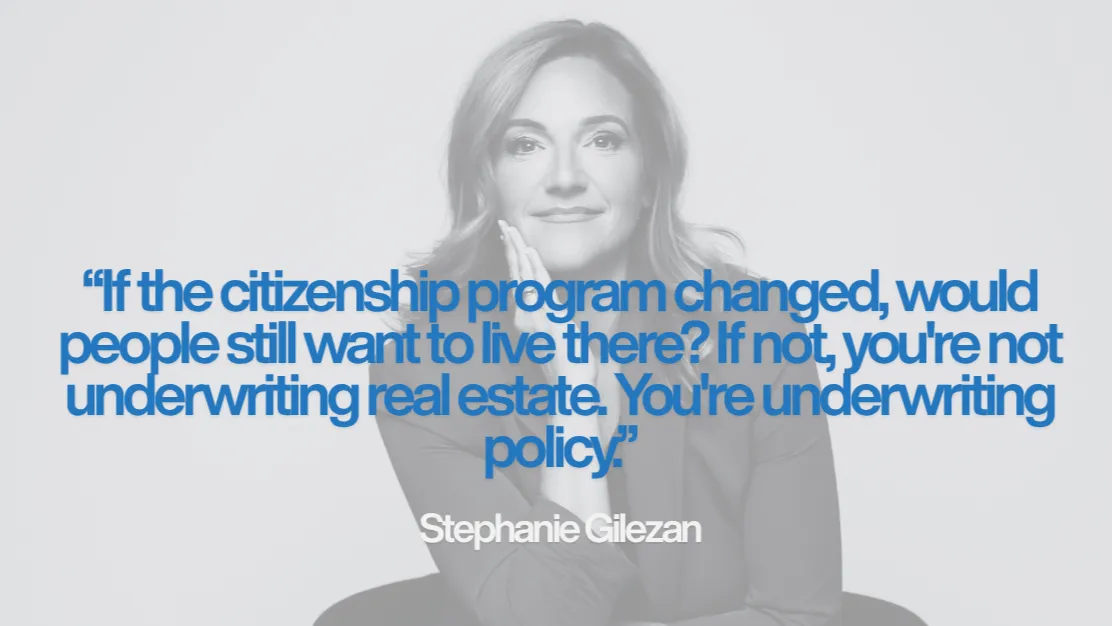
If the citizenship program changed, would people still want to live there?
If the answer to both questions is no, you're not underwriting real estate.
You're underwriting policy.
Grenada passes that test better than most people give it credit for.
But that doesn't mean you buy the brochure.
In fact, Grenada is a perfect example of why international buyers need to separate the postcard from the property.
Start with hurricane risk.
For years, Grenada benefited from the perception that it sat far enough south to be relatively protected from the Caribbean's worst storms.
History complicated that story.
Hurricane Ivan caused enormous damage in 2004. Hurricane Beryl brought another reminder in 2024, particularly to Grenada's sister islands.
So my buying criteria are not romantic.
I want construction I trust.
I want the roof understood.
I want the insurance policy current.
I want to know what happens when the weather isn't cooperating with the marketing department.
In a coastal market, resilience isn't an amenity.
It's part of the underwriting.
Then comes location.
For most first-time buyers, I'd start with Grand Anse.
Grand Anse is the address the rest of Grenada tends to get measured against: long white sand, close to the airport, close to the university, established tourism demand, and the kind of location international renters already understand before you explain it to them.
If the property needs to work financially when you're not using it, that matters.
And that gives me one of the simplest ways to explain the Grenada market.
Grand Anse is where the renters are.
Lance aux Épines is where the residents are.
Those are not the same buyer.
Lance aux Épines is quieter and more residential — private villas, established streets, long-term owners, expats, coves, and proximity to the southern yachting community.
If you're genuinely planning to spend extended periods on the island and want the property to feel like a home instead of an income-producing resort unit, that's a very different proposition.
Most second-home buyers tell me they want the second version.
Then we start discussing numbers, and many discover they're actually the first.
Because an empty villa is still carrying expenses while you're back home.
Your property has to match the life you're actually going to live, not the life you imagined while looking at the listing photos.
That distinction becomes even more important when branded and citizenship-approved projects enter the conversation.
One project can contain two very different products.
You might see an entry point into an approved development that looks dramatically lower than the price of the villas being marketed on the same beach.
Look carefully.
One may be a share or fractional interest tied to an approved citizenship structure.
The other may be a multimillion-dollar whole villa.
Same brand.
Same beach.
Completely different asset.
That's where buyers get themselves into trouble internationally. They fall in love with the destination, recognize the hotel or development name, see the citizenship eligibility, and mentally combine everything into one product.
It isn't one product.
Before you fall in love with the brochure, know exactly what you own.
Then understand what ownership structure costs you.
A foreign buyer purchasing ordinary real estate in Grenada can face an Alien Landholding License cost that materially changes the acquisition math. Approved citizenship structures can operate differently.
That's not a footnote.
A 10% cost on the acquisition side can change what looked like a very attractive price very quickly.
International buyers consistently underestimate this part of the transaction.
They compare asking prices.
Experienced buyers compare the amount of money that has left their account by the time they legally own the property.
Those are two very different numbers.
Citizenship adds another layer.
Grenada's program is particularly interesting because the country also has an investor treaty relationship with the United States that can create an E-2 visa pathway for qualifying Grenadian citizens.
That sentence sells a lot of dreams.
The details are considerably less glamorous.
For citizenship obtained through financial investment, U.S. rules introduced additional domicile requirements before that E-2 pathway can be used.
And domicile does not mean taking a vacation there twice a year.
It means making Grenada home.
That's why I tell buyers to reverse the question.
Don't ask:"What citizenship can this property get me?"
Ask:"Would I actually want to own this property if the citizenship benefit disappeared tomorrow?"
Then:"Would I want to live here if the immigration strategy required me to?"
Those two questions eliminate a surprising number of bad investments.
There's one more part of Grenada worth understanding: Carriacou.
Right now, I don't look at Carriacou and see a cheap version of Grenada.
I see a recovery story.
That distinction matters.
Lower prices after a major storm don't automatically equal value. Rebuilding takes time. Infrastructure takes time. Rental demand takes time to normalize.
If you're buying because you value quiet, patience, and the idea of participating in a recovery, that's one thesis.
If you need a turnkey property producing reliable rental income next season, that's another.
A discount and an opportunity are not synonyms.
The entire Grenada decision comes back to that kind of honesty.
Do you want a home or an income property?
Do you want Grand Anse convenience or Lance aux Épines privacy?
Do you want whole ownership or participation in an approved investment structure?
Do you genuinely want Grenadian life, or do you only want what Grenadian citizenship might unlock somewhere else?
There are no universally correct answers.
But there are expensive answers given to the wrong questions.
My starting point is much simpler.
Find the beach you would actually want to wake up on.
Find the property you would still want if no government offered you anything for buying it.
Underwrite the rental demand, weather exposure, insurance, ownership costs, and exit as if citizenship didn't exist.
Then, once the real estate works on its own, look at what the residency or citizenship structure can add.
That's the order.
Because a passport can make a good property strategy more valuable.
It can't turn a bad property into a good one.
And five years after the closing, the buyers who are still glad they own in Grenada usually aren't talking about the application they filed.
They're talking about the place they bought.
Let the citizenship follow the house.
Not the other way around.
International buyers: if a property's residency or citizenship benefit disappeared tomorrow, would you still want to own it? That may be the most useful cross-border investment question nobody asks.
Originally published on LinkedIn on September 18, 2026.
- Global Real Estate
- Grenada
- International Real Estate
- Caribbean Real Estate
- Luxury Real Estate
- Second Homes
- Citizenship By Investment
- Real Estate Investing
- Airdomo