
Global Investing · June 19, 2026
Buying Property Abroad as an American? The IRS Still Gets a Seat at the Table
A buyer sees a beautiful home in Portugal, Costa Rica, Italy, Mexico, or the Caribbean.
The view is perfect. The lifestyle makes sense. The numbers look promising. The dream starts becoming very real.
Then someone at dinner says, “You know American taxes on foreign property are a nightmare, right?”
And suddenly the entire conversation freezes.
I see this all the time.
A buyer goes from inspired to terrified in about thirty seconds. Not because they received qualified advice, but because they heard half a tax fact from someone who may or may not know what they are talking about.
That is where people get in trouble.
Owning property abroad as an American is absolutely workable. Many people do it successfully. But it is not the same as buying a home in Florida, Arizona, or the Hamptons.
The rules are different.
And different does not mean impossible.
It means you need to understand the map before you start driving.
Let’s be clear from the beginning: this is not tax advice. I am not your CPA, and I am not your tax attorney. But after more than 26 years in real estate, and now working with buyers across global markets through Airdomo, I can tell you this with confidence:
Most international real estate mistakes are not caused by the property.
They are caused by the structure around the property.
The paperwork. The reporting. The ownership vehicle. The timing. The assumptions. The advisor team, or lack of one.
A beautiful property can still become a very expensive headache if the buyer handles the tax and reporting side casually.
Glamour is not due diligence.
The First Reality: The IRS Does Not Stop Caring Because You Crossed a Border
This is the part many American buyers do not fully understand.
The United States taxes its citizens on worldwide income. That means where you live and where the asset sits do not automatically remove you from the U.S. tax conversation.
If you are an American buyer purchasing property abroad, you are usually dealing with two layers:
The country where the property is located. And the United States.
That does not mean you are automatically being taxed twice on the same income. Tax treaties, credits, and proper filings exist to help prevent double taxation.
But here is the key phrase: proper filings.
Tax treaties do not help you if you do not file correctly. Foreign tax credits do not help you if the timing is wrong. And good intentions do not protect you from penalties.
This is why buyers need qualified cross-border advice before they sign, not after they have already wired the deposit and are emotionally committed.
Once emotion is driving the transaction, discipline tends to leave the room.
And discipline is exactly what international buying requires.
Foreign Property Itself May Not Be the Problem. The Accounts Around It Often Are.
A lot of buyers assume that buying foreign real estate automatically creates some massive reporting issue on the property itself.
Not always.
Foreign real estate held directly in your personal name may not be reportable in the way people fear. But the foreign bank accounts used to buy, maintain, rent, or operate that property can absolutely trigger reporting obligations.
This is where acronyms like FBAR and FATCA enter the conversation.
Everyone loves an acronym that sounds like a federal warning label.
But these are not taxes. They are reporting requirements.
That distinction matters.
Filing a reporting form may not cost you tax. Failing to file it properly can cost you dearly.
For example, FBAR reporting can be triggered when the combined balance of foreign financial accounts exceeds certain thresholds. The word “combined” is important. Buyers sometimes think they are fine because no single account crosses the line.
That is not how the test works.
This is exactly why casual advice is dangerous.
A friend may say, “Oh, I have a place overseas and I never had an issue.”
Wonderful. That does not mean your structure, accounts, residency, rental income, ownership vehicle, or reporting obligations are the same.
Anecdotes are not a compliance strategy.
Rental Income Is Still Income
Another common misconception is that foreign rental income somehow only matters if the money is brought back to the United States.
That is not how it works.
If an American owns a rental property abroad, that income generally needs to be reported in the United States, even if the money stays in a foreign account.
This is one of the places where buyers need to be very careful with their assumptions.
A villa in Costa Rica. A branded residence in the Caribbean. A short-term rental apartment in Portugal. A ski property in Europe.
If it produces income, that income has a tax and reporting story.
The good news is that foreign taxes paid locally may be credited against U.S. tax obligations in many situations. But the timing and treatment matter.
This is where a real cross-border CPA earns their fee.
Not someone who “does taxes.” Not someone who helped your cousin with a basic return. Someone who routinely handles U.S. filings for clients with foreign assets.
There is a very big difference.
Ownership Structure Is Not a Detail
One of the most important decisions a buyer makes is how the property will be owned.
In personal name? Through a U.S. LLC? Through a local entity? Through a trust? Through another structure required or recommended in that specific country?
There is no universal answer.
And anyone who gives you one without understanding the country, property type, buyer profile, income plan, estate plan, and tax position is guessing.
Personal ownership may be clean and simple in certain countries.
A U.S. LLC may offer liability benefits in some cases, but may not be recognized the same way in another country. In some jurisdictions, it can create problems or unexpected tax treatment.
A local entity may be required in certain markets or useful in specific situations, but it can also trigger additional U.S. reporting.
The right answer in Mexico is not automatically the right answer in Italy.
The right answer in Costa Rica is not automatically the right answer in Portugal.
This is where buyers need to slow down.
Not forever. Just long enough to avoid an expensive mistake.
The goal is not to create the most complicated structure possible. Some buyers confuse complexity with sophistication.
That is a very expensive misunderstanding.
The goal is to create the right structure for the asset, the country, the buyer, and the long-term plan.
Clean beats clever more often than people think.
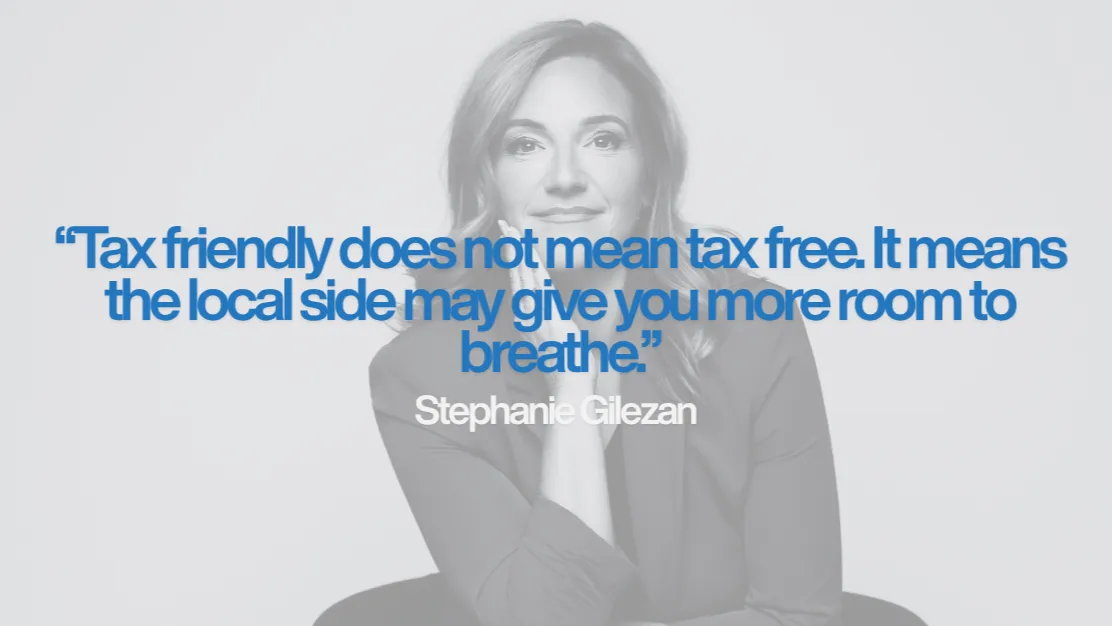
“Tax Friendly” Does Not Mean “Tax Free”
This is another phrase that gets thrown around far too casually.
A country may have low property taxes. It may have no local capital gains tax in certain situations. It may have a territorial tax system. It may offer incentives for retirees, investors, or new residents. It may have a favorable treaty with the United States.
All of that can be valuable.
But “tax friendly” does not mean “tax free.”
It usually means the local side may be more favorable, more manageable, or more efficient. That can make a meaningful difference for American buyers because the U.S. filing obligation still has to be handled.
Low local taxes can give you more breathing room.
They do not make the U.S. disappear.
This is why I always want buyers to look beyond the headline.
“No capital gains tax” sounds wonderful.
But what does that mean locally? What does it mean federally? What happens when you sell? What happens if the property is rented? What happens if you become a resident? What happens if you pass the property to your children? What happens if the rules change?
These are not negative questions.
These are adult questions.
And adult questions are what protect beautiful purchases from becoming complicated problems.
The Advisor Team Matters More Than the Sales Deck
A polished brochure will not file your FBAR.
A beautiful website will not structure your purchase.
A charming local agent may be excellent at showing property, but that does not mean they understand how the purchase interacts with your U.S. tax position, estate plan, or reporting obligations.
This is not an insult. It is just reality.
International real estate requires the right bench.
At minimum, serious American buyers should be thinking about:
A cross-border CPA who understands U.S. taxpayers with foreign assets. Qualified local legal counsel in the country of purchase. A notary or local closing professional where required. A U.S. estate planning attorney who understands foreign property. A local property manager if the home will be rented or maintained while vacant.
That team costs money.
So does getting it wrong.
And I promise you, the cost of proper advice is usually much smaller than the cost of fixing a bad structure later.
Especially if your children are the ones left to untangle it.
That is not legacy planning. That is leaving homework.
My Point of View
American buyers should not be afraid of owning property abroad.
They should be prepared.
There is a difference.
Fear makes buyers freeze. Preparation makes buyers powerful.
The strongest buyers are not the ones who move the fastest. They are the ones who ask the right questions early.
Before the deposit. Before the entity. Before the rental program. Before the emotional attachment becomes too strong.
The real question is not, “Can I buy property abroad as an American?”
The real question is, “Have I built the right structure around the purchase so I can own it confidently?”
That is where the quality of the decision lives.
International property can create lifestyle, income, mobility, diversification, family legacy, and long-term optionality.
But it has to be handled with respect.
Not fear. Respect.
Because buying abroad is not just a real estate decision. It is a tax decision, an estate decision, a lifestyle decision, and sometimes a citizenship or residency decision.
That is why buyers do not need more noise.
They need clarity.
They need the right advisors. They need country-specific guidance. They need to know what they are signing. They need to understand how the property functions after closing.
The view may sell the dream.
The structure protects it.
And that is the part smart buyers get right before they ever pick up the keys.
What is the biggest question you would want answered before buying property abroad: taxes, ownership structure, rental income, estate planning, or local market risk?
Originally published on LinkedIn on June 19, 2026.
- Global Real Estate
- International Real Estate
- Luxury Real Estate
- Real Estate Investing
- Cross Border Investing
- Wealth Strategy
- Second Homes
- Destination Real Estate
- Airdomo
- Property Investment