
Commercial Real Estate · July 23, 2026
From Listing Agent to Developer: What Building Taught Me About the Other Side of the Table
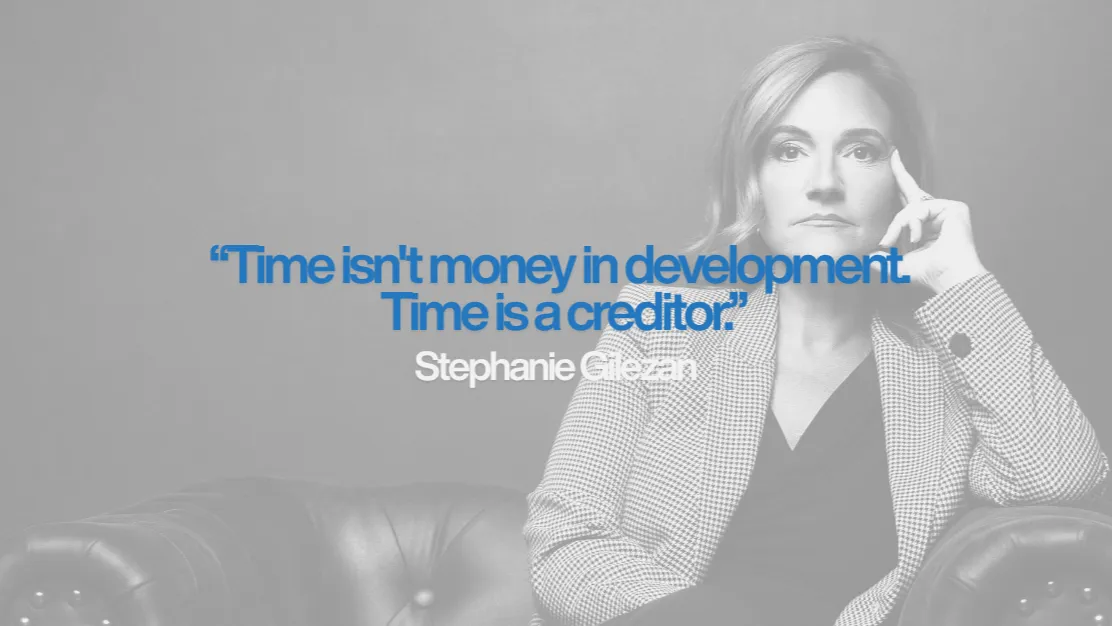
Most brokers sell development. Almost none carry it. Sitting in both seats — at The Breakers at Prospect and Noblewood at Utica — rewired how I underwrite everything.
For most of my career, I sold what other people built. Then I started building — The Breakers at Prospect in Kentucky, where I now live in one of my own homes, and Noblewood at Utica across the river in Indiana, an 87-homesite community. I assumed 26 years of brokerage had prepared me for development.
It had prepared me for about half of it.
Brokers and developers look at the same project and see different things. The broker sees the finished product: the pricing, the absorption, the marketing story, the buyer. The developer sees everything that has to go right before any of that exists: the entitlement timeline, the carry cost, the contractor who didn't show, the utility easement nobody flagged, the rain. The broker's risk ends at the commission. The developer's risk compounds daily, with interest — literally.
Sitting in both seats has rewired how I work in each. A few of the lessons:
Carry cost is the silent partner in every decision. As a broker, I used to wonder why developers were so impatient — why they'd take a slightly lower price for speed, why a 60-day delay made them irritable. Then I started writing the checks. Every month a project sits, the debt service, taxes, insurance, and overhead eat margin whether anything happens or not. Time isn't money in development. Time is a creditor. Once you've felt that, you negotiate differently on behalf of every developer client you represent — and you read every seller's "patience" for what it usually is: someone else's carry running out.
The pro forma is a hypothesis, not a plan. Every development pro forma I've ever seen — including my own — was a work of optimistic fiction in at least three line items. The discipline isn't building a perfect model; it's knowing which assumptions are real load-bearing walls and which are decoration. Site work costs, timeline to first closing, and absorption pace are where projects actually live or die. Brokers who understand that stop presenting comps as gospel and start presenting them as one input into someone's survival math.
Buyers tell the truth to builders that they hide from agents. Selling homes in my own communities, with my own sales team on site, I hear unfiltered feedback no listing agent ever gets. What buyers say they want and what they pay for are different lists. They say open floor plans; they pay for storage, light, and the lot. They say price; they pay for certainty — a builder who delivers on schedule and a community whose finished vision they can already see. That intelligence now flows back into everything I broker.
Construction is a relationships business wearing a contracts costume. The contract matters when things go wrong. What determines whether things go wrong is whether your contractors answer your calls, whether your trades come back tomorrow, and whether your reputation in the local building community is worth protecting. I knew this abstractly as a broker. As a developer, I know it on a first-name basis.
Living in your own product is the ultimate quality control. I live at The Breakers. My neighbors are my buyers. There is no faster feedback loop in the world than running into your customer at the mailbox. I recommend it to every developer who's brave enough — and I notice the ones who would never dare.
Here's why this matters beyond my own education. The gap between broker thinking and developer thinking is where deals get mispriced — in both directions. Brokers who've never carried a project routinely misjudge what a development site is worth, because they price the dream and ignore the gauntlet. Developers who don't think like brokers routinely build the wrong product for the actual buyer, because the pro forma never had to take a phone call from a customer. The most valuable people in any development deal are the translators — the ones who've genuinely sat in both chairs.
That's the seat I occupy now, and it's changed my practice. When I represent a developer, I negotiate like someone who knows what their carry costs. When I evaluate land for a client, I underwrite it like someone who has personally paid for site work surprises. And when I advise an investor on a development deal, I can tell them which risks in the pitch deck are real and which ones the sponsor is actually losing sleep over — because I've lost the same sleep.
If you're a broker considering your first development, an investor evaluating a sponsor, or a landowner wondering what your dirt is actually worth to someone who has to build on it — talk to someone who's signed both sides of that math. I'm easy to find. I'll be at the mailbox.
Developers and brokers: what's the one thing the other side consistently gets wrong about your half of the deal? Be specific — this comment section could be a masterclass.
Originally published on LinkedIn on July 23, 2026.
Related Markets: Development Land and Commercial Sites
- Real Estate Development
- Home Building
- Commercial Real Estate
- Land Development
- Real Estate Investing
- Construction
- Deal Making
- Kentucky