
Global Investing · August 7, 2026
The Second-Home Buyer Has Gone Global. Has Your Strategy?
The most interesting buyer conversation I had this quarter started with a Louisville-area client asking about lake property and ended, four questions later, in the Algarve.
That trajectory — local question, global answer — has gone from rare to routine in my practice, and it reflects something most U.S. real estate professionals haven't internalized yet: the second-home buyer has gone global, and they did it without asking the industry's permission.
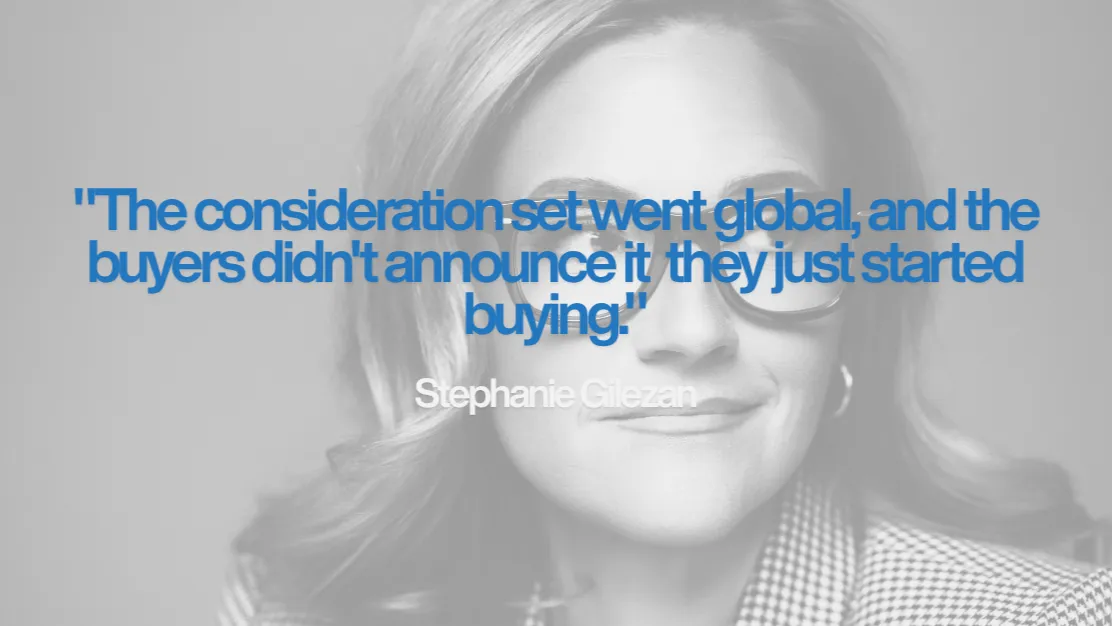
The drivers are structural, not trendy. Remote and hybrid work permanently severed the link between where wealth is earned and where life is lived. Golden visa and residency-by-investment programs turned property purchases into citizenship strategy. Branded residences — the hotel-flagged condo with services attached — solved the absentee-owner problem that used to make international ownership a hassle, which is precisely why that segment has been expanding aggressively across Europe, the Middle East, and Latin America. And a generation of buyers who think nothing of a nine-hour flight for a long weekend simply doesn't experience "international" as a barrier. To them, Lisbon competes with Scottsdale. Tulum competes with 30A. The consideration set went global, and the buyers didn't announce it — they just started buying.
Meanwhile, most of the U.S. industry still operates as if the state line were a wall. The average American agent, asked by their best client about property in Portugal or Dubai or Costa Rica, has exactly one move: a shrug and a Google search. That shrug is a referral fee walking out the door — and worse, it's a signal to your wealthiest clients that you're a local vendor rather than their real estate advisor.
I've built my practice across nearly 40 countries, and I'll tell you what the global second-home market actually rewards:
Fluency beats inventory. You don't need listings in Lisbon. You need to know how the Portuguese purchase process differs from the American one — that financing, title, escrow, taxes, and agency relationships work differently in nearly every country, and that your client's U.S. instincts will mislead them at least three times per transaction. The advisor who can navigate that is worth more than the one who happens to hold the listing.
Emerging markets are where the asymmetry lives. The established luxury markets are efficient and priced accordingly. The interesting opportunities are in the markets a step behind the migration: the places infrastructure, flight routes, and visa policy are improving faster than prices. Spotting those requires actually watching — air route announcements, residency program changes, branded-residence pipeline — not waiting for the market to show up in a U.S. headline, by which point the asymmetry is gone.
Currency and structure are part of the deal, not afterthoughts. A second home abroad is a cross-border financial position. Exchange-rate timing, ownership structure, estate implications, rental regulation — these swing real money, and the buyer's U.S. attorney and CPA usually can't help. Knowing who can, in each market, is the service.
The branded residence is the gateway drug. For first-time international buyers, the branded product — professional management, rental programs, lock-and-leave simplicity — removes most of the friction that used to kill these deals. It's frequently the right first purchase, and the segment's growth reflects exactly that.
This conviction is why I built Airdomo — a platform focused on luxury and destination property internationally — because I kept watching demand go global while the industry's infrastructure stayed stubbornly domestic. But the platform is downstream of the point, and the point applies to every advisor reading this: your clients' real estate lives are already international. The only question is whether you're in those conversations or finding out about the Portugal purchase at the closing party.
For buyers, the takeaway is simpler: the world is more available to you than your local advisor may be equipped to explain. Second homes, investment property, residency strategy — the menu is global now, and the difference between a great cross-border purchase and an expensive lesson is almost entirely the quality of guidance on the ground.
I've spent 26 years building the network that answers the four-questions-later version of the lake house conversation. If your real estate curiosity has outgrown the state line — or your business has clients whose curiosity already did — let's talk. The market went global. Your strategy should catch up.
Where's the most interesting international market on your radar right now — and what put it there? Bonus points if it's not on anyone's top-ten list yet.
Originally published on LinkedIn on August 7, 2026.
- Global Real Estate
- Luxury Real Estate
- Second Homes
- International Investing
- Branded Residences
- Emerging Markets
- Wealth Migration
- Airdomo