
Commercial Real Estate · May 7, 2026
Why Smart Wealth Advisors Keep a Real Estate Broker on Speed Dial
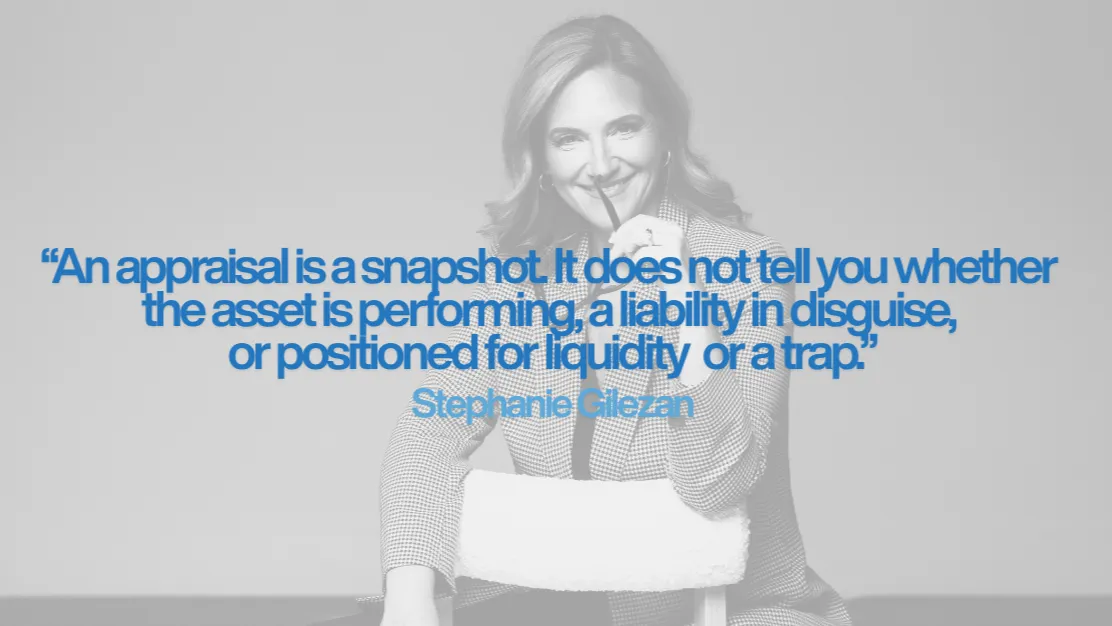
An appraisal tells you what a property is worth on paper. It does not tell you what it is worth to your client's financial future.
There is a conversation happening in wealth management offices right now, and it goes something like this.
A client sits down for their annual portfolio review. The advisor pulls up the balance sheet. Stocks, bonds, alternative investments all tracked in real time, updated daily, stress-tested quarterly. Then they get to real estate. And everything slows down. The number sitting on that line? It came from either an appraisal done two years ago or, more likely, from whatever the client told them it was worth. Neither one is a real answer.
The appraisal problem is real, but it is not the whole problem. Appraisals are a snapshot. They are black and white by design — a defensible number at a specific moment in time, produced for a specific purpose, usually financing or estate planning. They are not built to answer the questions a wealth advisor actually needs answered.
Is this asset performing? Is it a liability disguised as equity? Is it priced correctly for what the client wants to do next? Is it positioned for liquidity, or is it a trap?
An appraisal will not tell you that the property has deferred maintenance that will consume 30% of its appraised value within five years. It will not tell you that the rental income the client is reporting has not been stress-tested against market rents. It will not tell you that a client's vacation home in a resort market is carrying costs that make it a money pit, not an asset.
A number on a page does not tell you any of that.
Then there is the other problem — the client.
I say this with complete respect, because I work with sophisticated, intelligent people every day. But when it comes to real estate, clients almost always overestimate value and underestimate carrying cost.
It is not intentional. It is emotional. Real estate is personal in a way that a stock portfolio is not. People attach meaning to their properties — the beach house, the investment property they built themselves, the land that has been in the family for decades. That meaning inflates perceived value and clouds objective judgment.
When a client tells you their property is worth a certain number, what they are really telling you is what they hope it is worth, what they paid for it plus appreciation in their head, or what their neighbor sold for two years ago in a different market.
That is not a portfolio strategy. That is wishful thinking with a comma in it.
What wealth advisors actually need is a real estate health check.
This is where I come in and why some of the sharpest advisors I know have made a real estate broker part of their extended advisory team.
Not to replace the appraisal. The appraisal has its place. But to go beyond the number and give the advisor a full picture of what that asset actually represents.
A real estate health check looks at things like:
Current market positioning. Not what the property appraised for — what it would actually trade for today, in this market, with this buyer pool. Those are often very different conversations.
Asset condition and capital exposure. What deferred maintenance, necessary improvements, or code issues exist that could affect value or liquidity? What is the realistic cost to bring the property to market-ready condition?
Income performance. If it is a rental, is the income real? Is it at market? Is it structured correctly? Are there lease terms that would complicate a sale or transfer?
Carrying cost versus return. What is this property actually costing the client annually taxes, insurance, maintenance, management, opportunity cost relative to what it is producing? Many clients are shocked by this number when someone actually does the math.
Liquidity profile. How quickly could this asset be converted to capital if needed? What is the realistic timeline, what conditions would affect that, and what are the exit strategy options?
Strategic fit. Does this property still serve the client's financial goals, lifestyle goals, or legacy goals? Or is it inertia keeping it in the portfolio?
That is a real estate health check. And it is something no appraisal, no Zillow estimate, and no client self-report is going to give you.
Why this matters now more than ever.
High-net-worth portfolios have never been more real-estate-heavy. Between primary residences, vacation homes, investment properties, land holdings, and commercial interests, real estate can represent 30 to 50 percent or more of a client's total net worth. In some cases, it is the majority of the estate.
And yet it is often the least rigorously analyzed asset class in the room.
Interest rates, market cycles, geographic demand shifts, short-term rental regulation changes, climate risk the variables affecting real estate value and liquidity are multiplying. The advisor who is relying on a two-year-old appraisal and a client's best guess is not managing that exposure. They are ignoring it.
That is a risk management gap. And it is one that a qualified real estate professional can close.
What a good advisor-broker partnership looks like.
I am not in the business of replacing wealth advisors. I am in the business of making them look brilliant to their clients.
When I work with an advisor, I come in as a strategic resource — not as a listing agent chasing a commission, but as someone who can give an honest, experienced, market-grounded assessment of what the real estate in that portfolio is actually doing and what it should be doing.
Sometimes the answer is: this asset is solid, here is why, here is your optionality. Sometimes it is: this property is quietly bleeding value and here is what to do about it. Sometimes it is: your client is sitting on more equity than they realize in a market that is about to move, and here is how to position for it.
That kind of clarity is what separates good financial planning from great financial planning.
The smartest wealth advisors I know do not wait for the client to bring up real estate. They go looking for the full picture themselves.
And they do not do it alone.
Wealth advisors, how are you currently assessing the real estate in your clients' portfolios? I'd love to hear how your team approaches it.
Originally published on LinkedIn on May 7, 2026.
Related Markets: Louisville Investment Properties
- Wealth Management
- Real Estate Investing
- Financial Planning
- Luxury Real Estate
- Private Wealth
- Portfolio Strategy
- Real Estate Advisory
- HNW
- Airdomo
- Gilezan Global