
Global Investing · November 5, 2026
You Can Fall in Love With a Property You Are Not Allowed to Own
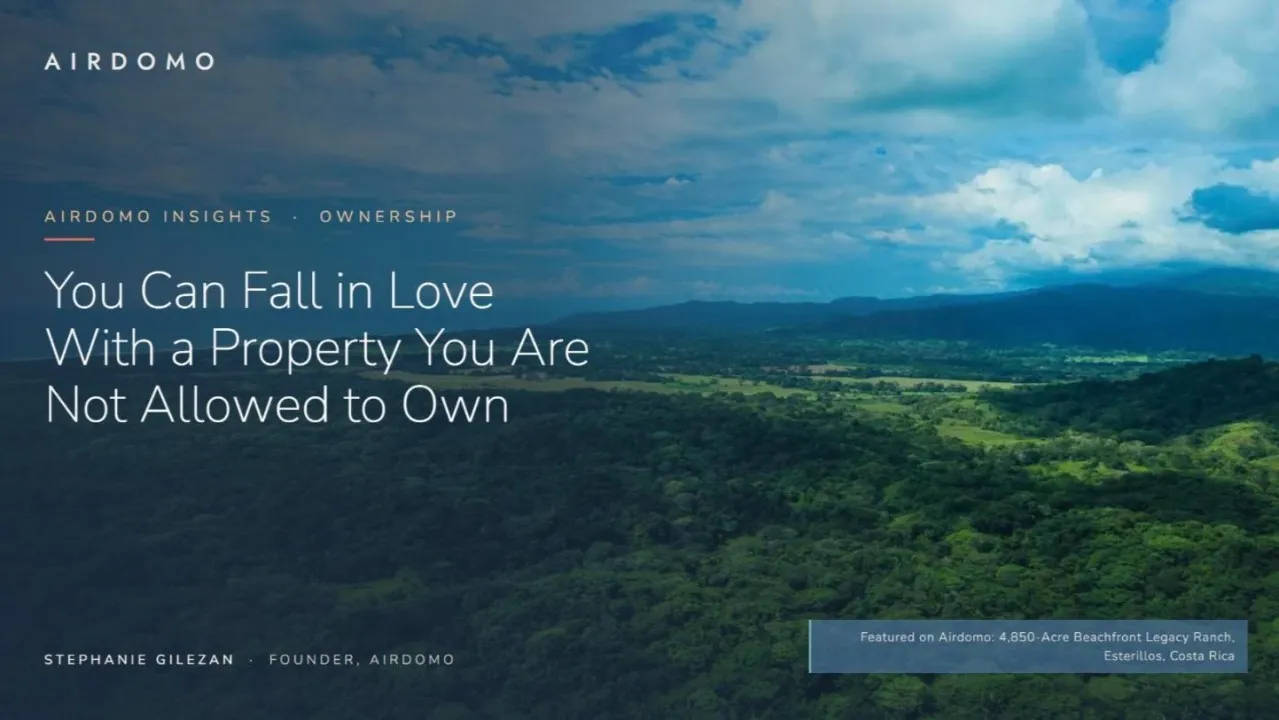
Every country writes its own rules for foreign buyers, and the title structure matters more than the view.
The most expensive question in international real estate is one most buyers never ask out loud: am I actually allowed to own this?
I have watched sophisticated people, people who would never sign a commercial lease without three rounds of redlines, fall for a beachfront villa on a phone screen and wire a deposit before anyone has explained how title works in that country. The view does the selling. The legal structure gets discovered later, usually at the worst possible moment.
Foreign ownership rules decide what you hold, how you hold it, what it costs to keep, and who you can sell it to. And they vary wildly from one coastline to the next.
Thailand is the classic example. Foreigners cannot own land there. They can own condominium units freehold, but only within a quota: no more than 49 percent of a building's total sellable floor area can be held by foreign owners, and the quota is measured by floor area rather than by unit count. The purchase money has to arrive from abroad in foreign currency and be converted into baht. There has been a lot of talk about raising the quota, but as of mid-2026 no amendment has passed. A buyer who falls for a villa with its own land is looking at a lease structure or a company arrangement, and the government has made it very clear that nominee shareholder setups are a risk it intends to police.
Mexico is friendlier than its reputation, but it has its own structure. Inside the restricted zone, which covers land within 50 kilometers of the coast and 100 kilometers of the border, a foreign individual holds residential property through a fideicomiso, a bank trust, with the buyer as beneficiary. It works well and it is widely used. It also carries setup costs and an annual trust fee, and the buyer needs to understand who the trustee is and what the trust deed allows.
Bali sits at the far end of the spectrum. Foreign individuals generally cannot hold freehold title in Indonesia, so the realistic options are leaseholds and the right-to-use title known as Hak Pakai. Plenty of buyers are perfectly happy there. The ones who are unhappy are the ones who thought they were buying something permanent.
Costa Rica is a different lesson. Foreigners can own titled property outright with the same rights as citizens, which is a real advantage. The catch is the coastline itself. Under the Maritime Zone Law, the first 50 meters from the high tide line belong to the public and the next 150 meters are generally held as a government concession rather than titled land, with restrictions on concessions held by foreigners. Two properties on the same beach, a few hundred feet apart, can carry completely different ownership rights.
Then there are markets like the Turks and Caicos Islands, where foreign buyers can hold freehold title directly. Clean and simple. Simple is a feature worth paying for, and it is worth knowing which markets offer it before you start comparing prices.
Here is the strategic point. The ownership structure is part of the asset. A leasehold with 20 years remaining is a different investment than a freehold, even if the photos are identical. A trust with annual fees has a carrying cost the listing price does not show. A condo in a building whose foreign quota is already full may only be sellable to locals, which shrinks your exit market overnight. None of this shows up in a lifestyle video.
My position is simple. Underwrite the title before you underwrite the view. Before a buyer spends a dollar on travel, they should be able to answer four questions in writing. What exactly will I hold, freehold, leasehold, trust or concession? Who can I legally sell it to later? What does it cost each year just to keep the structure in place? And who on the ground, a local attorney or notary with no stake in the sale, has confirmed all of it?
This is the reason I built Airdomo the way I did. Every island and every country has its own rules, and buyers deserve one place to find vetted property and understand how to legally purchase and own it, with someone guiding them from the first search to the closing table. Airdomo now covers 28 countries, and the conversation we have most often is about structure, long before anyone talks about finishes or square footage.
If you are advising clients who are looking abroad, or you are the buyer yourself, start with the ownership map. Fall in love second.
Browse vetted international property and the ownership notes for each market at Airdomo.com, and bring me the question you have not been able to get a straight answer on.
If you have bought or advised on a property abroad, what ownership detail surprised you after the contract was signed?
Originally published on LinkedIn on November 5, 2026.
- InternationalRealEstate
- ForeignBuyers
- SecondHomes
- LuxuryRealEstate
- CostaRicaRealEstate
- GlobalInvesting
- Airdomo